15 Best Board Games in 2026: Expert Picks for Every Type of Player

Contents
A great board game can turn an ordinary evening into a competitive showdown, a cooperative adventure or an unexpectedly hilarious experience.
However, finding the best board games in 2026 is not simply about choosing the highest-rated title or picking something popular on social media.
Some board games are designed for families who want an easy introduction to strategy. Others challenge experienced players with complicated decisions, resource management and carefully calculated risks.
Then there are party games where the entertainment comes almost entirely from the people sitting around the table.
As gaming enthusiasts, we believe the most important question is not whether a board game is popular, but whether its mechanics, playing time and level of interaction suit the people buying it.
Our selection considers established tabletop recommendations, game mechanics, publisher information and the characteristics that make games appealing to different types of players.
We have also considered what video-game enthusiasts may enjoy when exploring tabletop gaming.
Our recommendations cover everything from accessible favourites such as Ticket to Ride and Azul to more demanding experiences such as Dune: Imperium – Uprising.
Which Are the Best Board Games in 2026?
Here are our 15 recommended board games, selected for their gameplay, replayability, accessibility and suitability for different audiences.
| Board Game | Best For | Players | Playing Time | Our Rating |
| Ticket to Ride: Europe | Overall family gaming | 2–5 | 30–60 mins | 95% |
| Cascadia | Relaxing strategy | 1–4 | 30–45 mins | 94% |
| Azul | Beginners and tactical players | 2–4 | 30–45 mins | 93% |
| Sky Team | Cooperative couples | 2 | 20 mins | 93% |
| 7 Wonders Duel | Competitive two-player gaming | 2 | 30 mins | 92% |
| Codenames | Parties and groups | 4–8+ | 15 mins | 92% |
| Heat: Pedal to the Metal | Racing enthusiasts | 1–6 | 30–60 mins | 92% |
| The Quacks of Quedlinburg | Push-your-luck gaming | 2–4 | 45–60 mins | 91% |
| Wingspan | Engine-building strategy | 1–5 | 40–70 mins | 91% |
| Carcassonne | Classic tile-placement strategy | 2–5 | 35–45 mins | 90% |
| Pandemic | Cooperative problem-solving | 2–4 | 45–60 mins | 90% |
| Just One | Casual family gatherings | 3–7 | 20 mins | 89% |
| Dune: Imperium – Uprising | Experienced strategy gamers | 1–4* | 60–120 mins | 88% |
| Dobble | Kids and quick sessions | 2–8 | 15 mins | 86% |
| The Traitors Board Game | Social deduction and bluffing | 4–6 | 60–90 mins | 80% |
Dune: Imperium – Uprising also includes a separate six-player team mode.
How we calculate our editorial scores: Gameplay and decision-making account for 30%, replayability 25%, accessibility 20%, suitability for different player groups 15%, and components, setup and value 10%.
These percentages represent our editorial assessments rather than customer satisfaction statistics or independently measured test results. Playing times are approximate and can vary with experience.
1. Ticket to Ride: Europe – Best Overall Board Game
Our Rating: 95% | Best For: Families and mixed-experience gaming groups
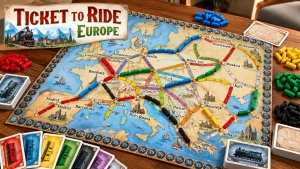
Ticket to Ride: Europe remains one of the easiest recommendations for people who want a genuinely engaging strategy game without spending an entire evening learning complicated rules.
Players collect coloured train cards and use them to claim railway connections between European cities.
The main challenge involves completing destination routes while preventing opponents from occupying valuable connections.
The concept sounds straightforward, but the strategic possibilities develop quickly.
A player might spend several turns collecting cards to complete a long route, only to discover that another player has taken a vital connection.
Suddenly, an apparently simple railway-building game becomes a contest of planning, timing and risk management.
The European edition introduces tunnels, ferries and train stations. These mechanics create additional decisions without significantly changing the accessible nature of the original game.
Why We Recommend It?
Ticket to Ride offers an excellent balance between skill and accessibility.
New players can understand the basic objective after a relatively short explanation, while experienced players can improve by studying the board, predicting competing routes and deciding when to reveal their plans.
Our assessment finds its strongest qualities in three areas: understandable rules, meaningful strategic decisions and considerable replayability.
The colourful components and clearly visible progress also make it particularly satisfying for people who normally play digital strategy or management games.
The main drawback: Players with extensive tabletop experience may eventually find the strategic system less demanding than heavier games. The experience can also become frustrating when a critical route is blocked.
Our verdict: Ticket to Ride: Europe is the strongest all-round recommendation for households wanting one modern board game that can entertain children, adults and experienced players together.
2. Cascadia – Best Relaxing Strategy Board Game
Our Rating: 94% | Best For: Solo gamers, couples and puzzle enthusiasts
Cascadia demonstrates that a strategy game does not need battles, aggressive competition or complicated player interactions to remain interesting.
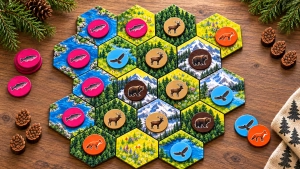
Players create wildlife habitats using hexagonal terrain tiles and animal tokens. Different species score points according to their arrangements, while connected landscapes provide additional opportunities.
Each turn requires players to select available pieces and decide where they will fit into their developing ecosystem.
Although the rules are relatively simple, planning a successful habitat requires balancing immediate scoring opportunities against the long-term arrangement of the board.
What Makes Cascadia Different?
Cascadia combines the satisfaction of a spatial puzzle with enough variation to encourage repeated play.
Its wildlife scoring cards can change between games, meaning a strategy that worked previously may not be equally effective in the next session.
It also provides a dedicated solo experience, making it one of our recommendations for people who enjoy gaming independently.
For video-game players, Cascadia has some similarities to relaxing building and puzzle experiences: players gradually create something visually satisfying while optimising a limited set of resources.
However, it is important to understand what Cascadia does not provide.
There is relatively little direct confrontation. Much of the gameplay involves concentrating on your own board rather than interfering with opponents.
The main drawback: Players who prefer negotiation, bluffing or direct competition may find the interaction too limited.
Our verdict: Cascadia is an outstanding choice for thoughtful, relaxing strategy and offers particularly strong value to households that alternate between solo and multiplayer gaming.
3. Azul – Best Board Game for Beginners Who Enjoy Strategy
Our Rating: 93% | Best For: New players and tactical thinkers
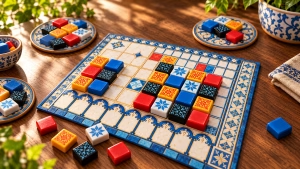
Azul is a tile-placement game in which players compete to create attractive mosaics while earning points through carefully organised patterns.
Players select groups of coloured tiles from shared displays and arrange them on individual boards. Completed patterns generate points, but poorly planned selections can create penalties.
One of Azul’s greatest strengths is how quickly a new player can understand what they are trying to achieve.
There are no complicated fictional worlds to learn, lengthy character descriptions or extensive decks of special abilities.
Instead, the challenge comes from recognising patterns and understanding how one decision affects the next.
A seemingly useful tile selection may leave an opponent with an excellent opportunity. Equally, collecting too many tiles can create costly waste.
Is Azul Suitable for Competitive Gamers?
Absolutely.
Despite its approachable presentation, Azul rewards players who plan several turns ahead and pay attention to their opponents.
At two players, the competition can become particularly tactical because each person has greater control over which tiles remain available.
With three or four players, the shared market becomes less predictable.
Our assessment rates Azul especially highly for its short learning curve and the depth it creates through a relatively small number of actions.
The main drawback: Players who prefer narrative adventures, character development or extensive thematic immersion may find the abstract gameplay less exciting.
Our verdict: Azul is one of the best choices for introducing strategy to people who normally assume board games are either too simple or too complicated.
4. Sky Team – Best Cooperative Board Game for Two Players
Our Rating: 93% | Best For: Couples and cooperative gaming partners
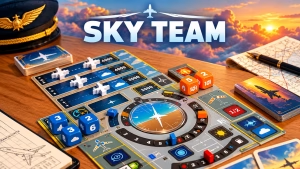
Sky Team takes a focused premise and transforms it into a surprisingly tense cooperative experience.
Two players become a pilot and co-pilot attempting to land a passenger aircraft safely.
They must control the aircraft’s speed, position, landing gear and other systems using dice placement.
The interesting part is that communication is restricted during important stages of play.
Both players need to understand their responsibilities and make decisions without constantly explaining their intentions.
This creates situations where a simple dice placement can either save the aircraft or place the entire landing attempt in danger.
Why Does Sky Team Work So Well?
Many cooperative board games allow one experienced participant to direct everyone else’s actions.
Sky Team reduces that problem by requiring each player to make meaningful independent decisions.
Players must cooperate, but they cannot always communicate exactly what they want their partner to do.
For people accustomed to cooperative video games, this creates a familiar combination of shared objectives, individual responsibilities and pressure.
The core game also offers different airport scenarios and additional challenges, increasing its replay potential.
The main drawback: Sky Team is designed exclusively for two players. It is not a flexible purchase for households that regularly host larger gatherings.
Our verdict: Sky Team is among the strongest two-player cooperative experiences for anyone who values teamwork over direct competition.
5. 7 Wonders Duel – Best Competitive Two-Player Strategy Game
Our Rating: 92% | Best For: Couples, rivals and serious tactical players
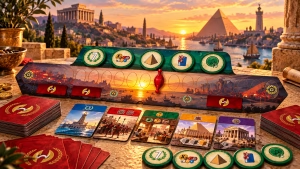
Unlike many traditional board games that simply allow two participants, 7 Wonders Duel was designed specifically around two-player competition.
Each player develops a civilisation by collecting resources, constructing buildings and increasing military and scientific influence.
The game features several routes to victory.
Players can achieve military supremacy, secure a scientific victory or compete through accumulated points.
That variety changes the way opponents respond to each other.
A player who concentrates entirely on economic development may suddenly discover that an opponent is approaching an immediate military victory.
The result is a game where players must constantly monitor both their own progress and their rival’s intentions.
What Gives It Replay Value?
7 Wonders Duel uses a card-selection system in which some cards cover others.
Taking one card can reveal additional options, potentially benefiting the opposing player.
This creates meaningful tactical decisions and makes the game feel interactive even when players are constructing separate civilisations.
Our analysis suggests it is especially attractive to people who enjoy technology trees, resource management and civilisation-building video games.
The main drawback: New players may need several sessions to understand which cards and strategies are most valuable.
Our verdict: 7 Wonders Duel is our recommendation for couples or friends who want a more competitive experience than Sky Team.
6. Codenames – Best Board Game for Parties

Our Rating: 92% | Best For: Friends, parties and large groups
Codenames is one of the most effective examples of a party game built around a simple concept.
Two teams compete to identify secret agents represented by words on a grid.
Each team’s spymaster gives a one-word clue and a number indicating how many words they intend to connect.
The remaining teammates must interpret the clue and identify the correct cards.
The problem is that language rarely works as precisely as players expect.
A clue that seems obvious to one person may have several completely different meanings to someone else.
That uncertainty is where much of the entertainment comes from.
Why Does Codenames Remain Popular?
Codenames requires comparatively little preparation and supports a wide range of social groups.
Each round creates opportunities for discussion, disagreement and unexpected interpretations.
The strongest sessions generally involve teams with enough players to generate competing ideas.
While smaller-player variants exist, we recommend four or more participants for the classic team-based experience.
The game also has considerable replay potential because different word combinations continually produce new clues.
The main drawback: Codenames depends heavily on vocabulary, communication and group participation. It is less appropriate for people who dislike word games or prefer visual challenges.
Our verdict: Codenames offers excellent entertainment for groups who enjoy conversation, teamwork and competitive guessing.
7. Heat: Pedal to the Metal – Best Racing Board Game

Our Rating: 92% | Best For: Racing-game enthusiasts and competitive friends
Heat: Pedal to the Metal successfully turns motor racing into a tactical card-management experience.
Players control racing cars by selecting movement cards, adjusting gears and managing the heat generated by pushing their vehicles too hard.
Taking risks can help a player gain positions, but excessive speed through corners can lead to serious consequences.
The result is a racing game where success depends on more than drawing a high movement card.
Players must understand when to accelerate, when to protect their engine and when to take calculated risks.
How Does It Compare With Racing Video Games?
Heat cannot reproduce the reflex-based experience of a racing simulator, but it captures a different side of motorsport.
The emphasis is on race strategy rather than mechanical driving skill.
Choosing the right gear, managing heat and preparing for upcoming corners become essential elements of success.
Players who enjoy motorsport management games may particularly appreciate this approach.
The game also includes additional modules that can increase complexity after players understand its basic mechanics.
The main drawback: The movement and gear-management rules require a little more explanation than those of typical family games.
Our verdict: Heat is a strong recommendation for competitive groups who enjoy racing themes and meaningful tactical decisions.
8. The Quacks of Quedlinburg – Best Push-Your-Luck Board Game
Our Rating: 91% | Best For: Families who enjoy risk and unpredictable outcomes
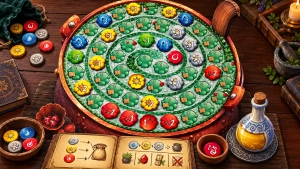
The Quacks of Quedlinburg gives players the role of unusual potion makers competing to produce valuable mixtures.
Each participant has a bag containing ingredient tokens.
Players repeatedly draw tokens and add them to their cauldrons, hoping to create increasingly valuable combinations.
However, drawing too many dangerous ingredients can cause the potion to explode.
The temptation to take another token creates the central challenge.
Stopping early may protect your progress, but continuing could produce greater rewards.
Why Is the Gameplay So Entertaining?
The game creates constant decisions between safety and potential rewards.
It also introduces a developing economic system.
Players use rewards to purchase improved ingredients, gradually changing the contents of their bags.
This creates a satisfying progression similar to upgrading abilities or equipment in video games.
Different ingredient combinations and abilities can also alter the experience between sessions.
The game is particularly suitable for groups that enjoy excitement without requiring constant direct confrontation.
The main drawback: Random token draws can occasionally frustrate players who want outcomes determined mainly by skill.
Our verdict: The Quacks of Quedlinburg offers a particularly enjoyable combination of unpredictable moments, progression and strategic purchasing decisions.
9. Wingspan – Best Board Game for Engine-Building Strategy
Our Rating: 91% | Best For: Strategy enthusiasts and nature lovers
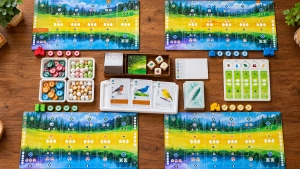
Wingspan is a competitive strategy game centred on developing wildlife habitats and attracting birds.
Players collect bird cards and place them within habitats that generate different resources and abilities.
As a player’s collection develops, the cards begin interacting with one another.
An action that initially provides a small benefit can eventually trigger several additional effects.
This is known as engine building.
The satisfaction comes from designing a system that becomes increasingly productive over time.
Why Do Strategy Gamers Appreciate Wingspan?
Wingspan rewards careful planning and an understanding of how different abilities interact.
There is considerable variety in the available bird cards, which encourages experimenting with different strategies.
The game also offers a solo mode and supports up to five players.
For fans of resource-management and optimisation video games, the gameplay provides familiar strategic satisfaction without requiring digital controls.
However, Wingspan is not necessarily the best first purchase for every household.
Its resource systems, card abilities and scoring objectives require more initial explanation than accessible alternatives such as Azul.
The main drawback: Some players may experience longer downtime while opponents consider card combinations, especially in larger groups.
Our verdict: Wingspan is an excellent medium-weight strategy game for people who enjoy developing increasingly powerful combinations and planning for long-term rewards.
10. Carcassonne – Best Classic Tile-Placement Board Game
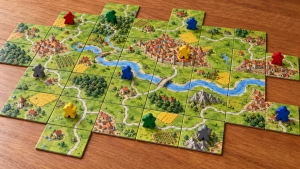
Our Rating: 90% | Best For: Families and traditional strategy enthusiasts
Carcassonne is built around a simple action: drawing a tile and adding it to a growing landscape.
The tiles contain roads, fields, cities and monasteries.
Players can place followers, commonly called meeples, to claim features and score points.
Although the basic mechanism is straightforward, the shared board creates a continuous struggle over valuable territory.
Placing one tile can improve your own position, interfere with an opponent or create an opportunity that neither player anticipated.
Is Carcassonne Still Worth Playing in 2026?
Yes.
Carcassonne is particularly valuable because the rules are relatively simple while the underlying decisions remain interesting.
Its competitive nature also changes depending on the number of players.
At two players, the contest is often more direct because each participant can concentrate on disrupting the other.
Larger groups introduce more uncertainty and competition over the developing landscape.
The main drawback: Random tile draws can occasionally make carefully planned strategies difficult to complete.
Our verdict: Carcassonne remains an excellent gateway game for anyone who wants traditional-looking board-game mechanics with substantially more strategic depth.
11. Pandemic – Best Cooperative Strategy Board Game for Groups
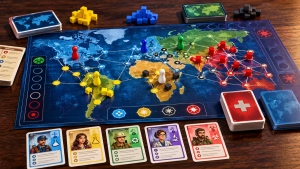
Our Rating: 90% | Best For: Teams that enjoy solving problems together
Pandemic replaces the traditional objective of defeating other players with a shared challenge.
Participants work together as specialists attempting to prevent the spread of four diseases across the world.
Each role offers different abilities, and players must coordinate their movements, exchange information and manage limited actions.
The group wins or loses together.
The board continuously changes as new infections appear, creating pressure to respond before the situation becomes unmanageable.
What Makes Pandemic Strategically Interesting?
Pandemic rewards planning and cooperation rather than individual scoring.
Players must decide which problems require immediate attention and which can be temporarily ignored.
This is similar to the experience of cooperative strategy video games, where a team must manage several threats at once.
The game also creates meaningful discussions about risk, resource allocation and long-term objectives.
However, Pandemic has a weakness that experienced gaming groups should consider.
An assertive player who knows the game well can sometimes begin making decisions for the entire table.
This behaviour, sometimes called quarterbacking, can reduce the sense of involvement for less experienced participants.
The main drawback: Groups need to make an effort to ensure everyone contributes instead of allowing one person to control the strategy.
Our verdict: Pandemic is an excellent introduction to cooperative strategy, particularly for friends who enjoy working towards a shared objective.
12. Just One – Best Casual Board Game for Family Gatherings
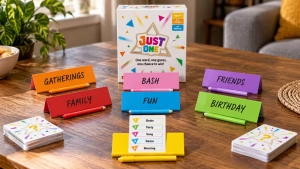
Our Rating: 89% | Best For: Mixed-age groups and relaxed social gaming
Just One is a cooperative word-guessing game that proves entertaining gameplay does not always require a physical board or complicated rules.
One participant attempts to identify a mystery word.
The other players independently write one-word clues to help.
However, identical clues are removed before the guesser sees them.
This means the team must find descriptions that are helpful without becoming too predictable.
Why Does Just One Work for Casual Players?
The game creates an immediate challenge that almost anyone can understand.
Players do not need to memorise complicated scoring systems, study a board or develop advanced strategies.
Success depends on understanding how other people think.
That makes Just One particularly attractive for family occasions involving participants with different levels of gaming experience.
It is also cooperative, which can help reduce the pressure felt by people who dislike highly competitive games.
The main drawback: Groups looking for tactical depth, long-term progression or sophisticated mechanics may find the experience too lightweight.
Our verdict: Just One is among our favourite choices for relaxed gatherings where easy participation matters more than strategic complexity.
13. Dune: Imperium – Uprising – Best Board Game for Experienced Strategy Gamers
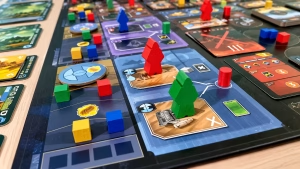
Our Rating: 88% | Best For: Experienced players and fans of complex strategy games
Dune: Imperium – Uprising is considerably more demanding than most of the games in our selection.
Inspired by the Dune universe, the game combines worker placement, deck building, resource management and conflict.
Players compete to develop influence, deploy agents and strengthen their positions on Arrakis.
Success requires understanding how several interconnected systems influence one another.
A player who focuses too heavily on combat may neglect important economic development.
Another player who concentrates on building resources may struggle to respond to an opponent’s expanding military influence.
What Makes It Suitable for Hardcore Gamers?
Dune: Imperium – Uprising rewards long-term planning and adapting to changing circumstances.
There are multiple strategic paths, and decisions frequently involve balancing short-term benefits against future opportunities.
This complexity may appeal strongly to people who enjoy digital grand-strategy games, tactical resource management and competitive deck-building systems.
However, we would not recommend it as a casual family’s first modern board game.
The rules require more concentration, and players should expect their first session to take longer than later games.
Standard play supports one to four participants, while a separate six-player team mode offers another experience.
The main drawback: Its relatively steep learning curve makes it unsuitable for groups seeking a quick introduction to tabletop gaming.
Our verdict: Dune: Imperium – Uprising is an excellent choice for committed strategy enthusiasts, but its complexity limits its appeal as a universal recommendation.
14. Dobble – Best Quick Board Game for Kids
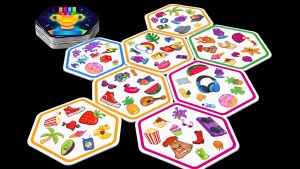
Our Rating: 86% | Best For: Younger players and short gaming sessions
Dobble is a compact observation game built around identifying matching symbols.
Each pair of cards has a symbol in common, and players compete to recognise it before their opponents.
The concept requires little explanation, making the game accessible to children and adults.
It is particularly useful when a group wants entertainment that does not require setting up a large board.
Why Is Dobble Worth Considering?
Dobble offers fast rounds and straightforward rules.
It rewards visual attention, recognition and quick reactions rather than complex strategic planning.
The compact format also makes it convenient for travelling, holidays and short breaks.
Families can use the game to introduce younger children to taking turns, following rules and playing competitively.
However, players should recognise that Dobble offers a different experience from the strategic titles in this ranking.
The main drawback: Its emphasis on speed and visual recognition may not suit players who prefer slower, thoughtful decisions or who find fast reactions difficult.
Our verdict: Dobble is a useful addition to a family game collection, especially when younger children or limited playing time are important considerations.
15. The Traitors Board Game – Best for Bluffing and Social Deduction

Our Rating: 80% | Best For: Fans of The Traitors and social deduction games
The Traitors Board Game translates the atmosphere of the television programme into a physical tabletop experience.
Players secretly receive roles, becoming either Faithfuls or a Traitor.
Participants complete missions, collect gold and attempt to identify suspicious behaviour.
The central attraction is not complicated mathematical strategy.
It is the uncertainty surrounding the people sitting around the table.
A perfectly innocent action can become suspicious when another participant presents a convincing argument.
Meanwhile, the Traitor must try to complete hidden objectives without revealing their identity.
Does The Traitors Board Game Have Enough Replay Value?
The current Second Edition, released in the UK in August 2026, includes six new adventures.
That gives groups several scenarios to experience, but replayability is still more limited than in endlessly variable games such as Codenames.
Once participants understand the hidden elements of an adventure, some of its initial mystery disappears.
Our more detailed review of The Traitors Board Game explores its missions, social deduction, components, limitations and how the Second Edition compares with other versions.
The game supports four to six players, although we recommend organising a group of five or six where possible.
A larger group creates more opportunities for deception, suspicion and competing theories.
The main drawback: The experience depends heavily on players being willing to participate in discussions, accusations and bluffing.
Our verdict: The Traitors Board Game is an entertaining themed choice for the right audience, although dedicated strategy gamers may prefer titles with stronger long-term replayability.
Which Board Games Work Best for Different Numbers of Players?
One of the biggest mistakes people make when buying board games is assuming that a game works equally well at every supported player count.
A box may advertise support for two to five participants, but the experience can change substantially depending on how many people are actually playing.
| Group Size | Our Recommended Games | Why They Work |
| Solo | Cascadia, Wingspan | Dedicated solo gameplay |
| 2 players | Sky Team, 7 Wonders Duel, Azul | Strong two-player decisions |
| 3 players | Cascadia, Carcassonne, Ticket to Ride | Manageable turns and consistent involvement |
| 4 players | Ticket to Ride, Pandemic, Azul | Good balance of interaction and strategy |
| 5–6 players | Heat, Codenames, The Traitors | Competitive or social group mechanics |
| 7–8 players | Codenames, Just One, Dobble | Fast, accessible group participation |
| Larger gatherings | Codenames | Flexible team-based play |
For couples, we particularly recommend considering whether both people enjoy cooperation.
Sky Team offers a shared challenge, whereas 7 Wonders Duel focuses on directly defeating an opponent.
For larger groups, social games often perform better than heavyweight strategy titles because they reduce downtime and keep more participants involved.
Why Some Popular Board Games Do Not Make Our Top 15?
Popularity is not always the best indicator of a game’s suitability.
Monopoly and Catan remain recognised names in tabletop gaming, but neither is automatically the best option for every household.
Monopoly
Monopoly is familiar and can encourage negotiation, trading and competitive behaviour.
However, conventional sessions can become lengthy, particularly when players negotiate extensively.
Player elimination can also mean that someone must sit out while the remaining participants continue.
For people who want shorter strategic experiences, Ticket to Ride or Carcassonne may be more suitable.
Catan
Catan remains an important modern strategy game because of its resource trading, settlement building and player interaction.
However, the standard base game is particularly dependent on the dynamics of three or four players.
Dice outcomes can also affect resource production significantly, even when players make sensible decisions.
We still consider Catan worth exploring, especially for groups who enjoy negotiation, but we would recommend Azul or Ticket to Ride ahead of it for many first-time buyers.
Traditional Chess and Backgammon
Classic games should not be dismissed simply because newer titles offer more elaborate components.
Chess remains an exceptional example of long-term strategic depth.
Backgammon combines positional strategy with probability management, creating a distinctive balance between planning and uncertainty.
Players interested in learning its traditional mechanics can explore how to play Backgammon, including setup, movement, hitting and bearing off.
Both games offer excellent replayability, but they appeal to a different audience from social party games or narrative tabletop adventures.
How Do the Best Board Games Compare With Video Games?
There is more overlap between modern tabletop gaming and video-game design than newcomers might expect.
Both formats use progression systems, resource management, risk assessment, player interaction and strategic decision-making.
For example, people who enjoy city-building or management games may appreciate the resource and route-planning systems in Ticket to Ride.
Players who enjoy relaxing puzzle games may prefer Cascadia or Azul.
Competitive racing fans may appreciate the planning involved in Heat: Pedal to the Metal.
Meanwhile, fans of cooperative multiplayer games may enjoy the shared objectives of Pandemic and Sky Team.
The important difference is how these mechanics are presented.
Digital games can automate complex calculations and provide immediate visual feedback. Physical board games usually ask players to manage more of the process themselves.
That creates a slower but often more socially interactive experience.
Our Board Game Recommendations Based on Video-Game Preferences
| If You Enjoy | Try This Board Game | Shared Appeal |
| Civilisation-building games | 7 Wonders Duel | Development and strategic progression |
| Racing management games | Heat | Risk, speed and tactical decisions |
| Relaxing puzzle games | Cascadia | Pattern building and optimisation |
| Competitive strategy games | Dune: Imperium – Uprising | Resources, conflict and planning |
| Cooperative multiplayer | Sky Team | Teamwork and shared objectives |
| Simulation and management games | Wingspan | Developing efficient systems |
| Social deduction games | The Traitors | Bluffing and reading opponents |
| Word and party games | Codenames | Communication and team competition |
These comparisons concern gameplay mechanics rather than identical experiences.
A board game will not necessarily reproduce the features of a digital title, but it can provide a different interpretation of the same strategic interests.
How Much Should You Spend on a Board Game?
The best board game is not necessarily the most expensive one.
A premium game with elaborate components can represent poor value if it is only played once.
A smaller game with straightforward rules may provide considerably more entertainment if it becomes a regular part of family gatherings.
We recommend evaluating value through three factors.
First, consider how frequently the game will actually reach the table.
A game that takes two hours to complete may be enjoyable, but it can become difficult to organise regular sessions.
Second, look at replayability.
Variable objectives, alternative strategies, randomised setups and different player interactions can help keep a game interesting.
Third, consider the audience.
Buying an advanced strategy game for people who dislike long explanations may produce an expensive and disappointing experience.
For UK buyers, it is also worth comparing specialist board-game retailers with mainstream toy shops rather than assuming the first listed price is the best available.
Check whether the product is a complete standalone game, a revised edition or an expansion requiring another purchase.
This is especially important with franchises such as Wingspan, Azul and Ticket to Ride, which have multiple products and versions.
What Should Beginners Look for Before Buying Board Games?
Before choosing a board game, we recommend checking five characteristics.
1. Learning Time
Playing time and learning time are different.
A game advertised as taking 30 minutes may still require a significant initial explanation.
Beginners should prioritise games with a straightforward core objective and limited special rules.
2. Player Interaction
Some games encourage direct competition.
Others allow players to develop their own boards with relatively little interference.
A third category requires cooperation.
Understanding which style the group enjoys can prevent a disappointing purchase.
3. Replayability
A good game should offer reasons to return after the first few sessions.
However, replayability is not always about having hundreds of cards or complicated rules.
Azul achieves replayability through changing decisions and opponents, while Cascadia introduces variation through different wildlife scoring conditions.
4. Downtime
Downtime is the period players spend waiting for their next meaningful action.
Games with long individual turns can become frustrating in larger groups.
Party games often minimise this problem by allowing several participants to think or discuss at the same time.
5. Storage and Setup
Large boards, numerous tokens and extensive card collections require space.
If gaming usually takes place at a small table, compact games may be significantly more practical than elaborate strategy titles.
These everyday considerations matter just as much as an impressive review score.
Our Final Verdict: Which Board Games Are Actually Worth Buying?
The best board games in 2026 offer more than attractive packaging or a familiar name. They create meaningful decisions, encourage participation and give players a reason to return.
After comparing these 15 recommendations, our strongest overall choice is Ticket to Ride: Europe, with a 95% editorial rating.
It strikes a particularly effective balance between accessibility, competitive gameplay and replayability.
For people who prefer a quieter experience, Cascadia offers excellent puzzle-based strategy. Azul is our recommendation for beginners interested in tactical thinking.
Sky Team and 7 Wonders Duel are particularly strong choices for couples, depending on whether cooperation or competition is the priority.
For larger gatherings, Codenames offers accessible social entertainment, while Heat provides a more involved competitive experience.
Experienced strategy gamers may prefer Wingspan or Dune: Imperium – Uprising, although both require a greater commitment to learning their systems.
Ultimately, we believe a board game’s long-term value depends less on its popularity and more on how naturally it fits a particular group.
A game that everyone understands, enjoys and wants to play again is a better investment than a highly rated title that spends most of its life on a shelf.
Our overall winner: Ticket to Ride: Europe – 95%.
Our best beginner strategy choice: Azul – 93%.
Our best cooperative two-player choice: Sky Team – 93%.
Our best party-game choice: Codenames – 92%.
Frequently Asked Questions About the Best Board Games
What is the best board game overall in 2026?
Our overall recommendation is Ticket to Ride: Europe, with an editorial score of 95%. Its balance of accessible rules, meaningful strategy and multiplayer appeal makes it suitable for many households.
Which board game is best for two adults?
Sky Team is an excellent cooperative choice, while 7 Wonders Duel is stronger for people seeking direct competition. Azul is another versatile option for two players.
What are the best board games for families?
Ticket to Ride: Europe, Cascadia, Azul, Carcassonne and Just One are strong family recommendations. The best choice depends on the children’s ages, reading abilities and interest in strategy.
Which board games have the most replayability?
Cascadia, Wingspan, Azul, Carcassonne and Dune: Imperium – Uprising offer considerable replay potential through changing strategies, game situations and player decisions.
What board game is best for beginners?
Azul and Ticket to Ride: Europe are excellent introductions to modern strategy. For casual social groups, Just One and Codenames are easier to bring into a relaxed gathering.
Which board games are best for parties?
Codenames, Just One and The Traitors are particularly suitable for social gaming. Codenames is more flexible for larger groups, while The Traitors works best with people who enjoy bluffing and discussion.
What are the best board games for strategy lovers?
Dune: Imperium – Uprising is our recommendation for experienced players seeking considerable strategic depth. Wingspan, 7 Wonders Duel and Heat also reward thoughtful decision-making.
Are expensive board games always better?
No. Price does not reliably indicate enjoyment or replayability. A relatively inexpensive game that suits your group can provide better long-term value than a costly strategy game that rarely gets played.
Can you play modern board games alone?
Yes. Cascadia, Wingspan and several other modern games include solo modes. However, not every game supports independent play, so buyers should check the specific edition before purchasing.
Are modern board games better than classic games?
Not necessarily. Modern titles often introduce more specialised mechanics and themes, but classics such as Chess and Backgammon offer substantial strategic depth.
The right choice depends on whether players prefer abstract competition, social interaction or themed experiences.